





Taken from: http://ctsc.tc.columbia.edu/read-our-news/bylp-elt/
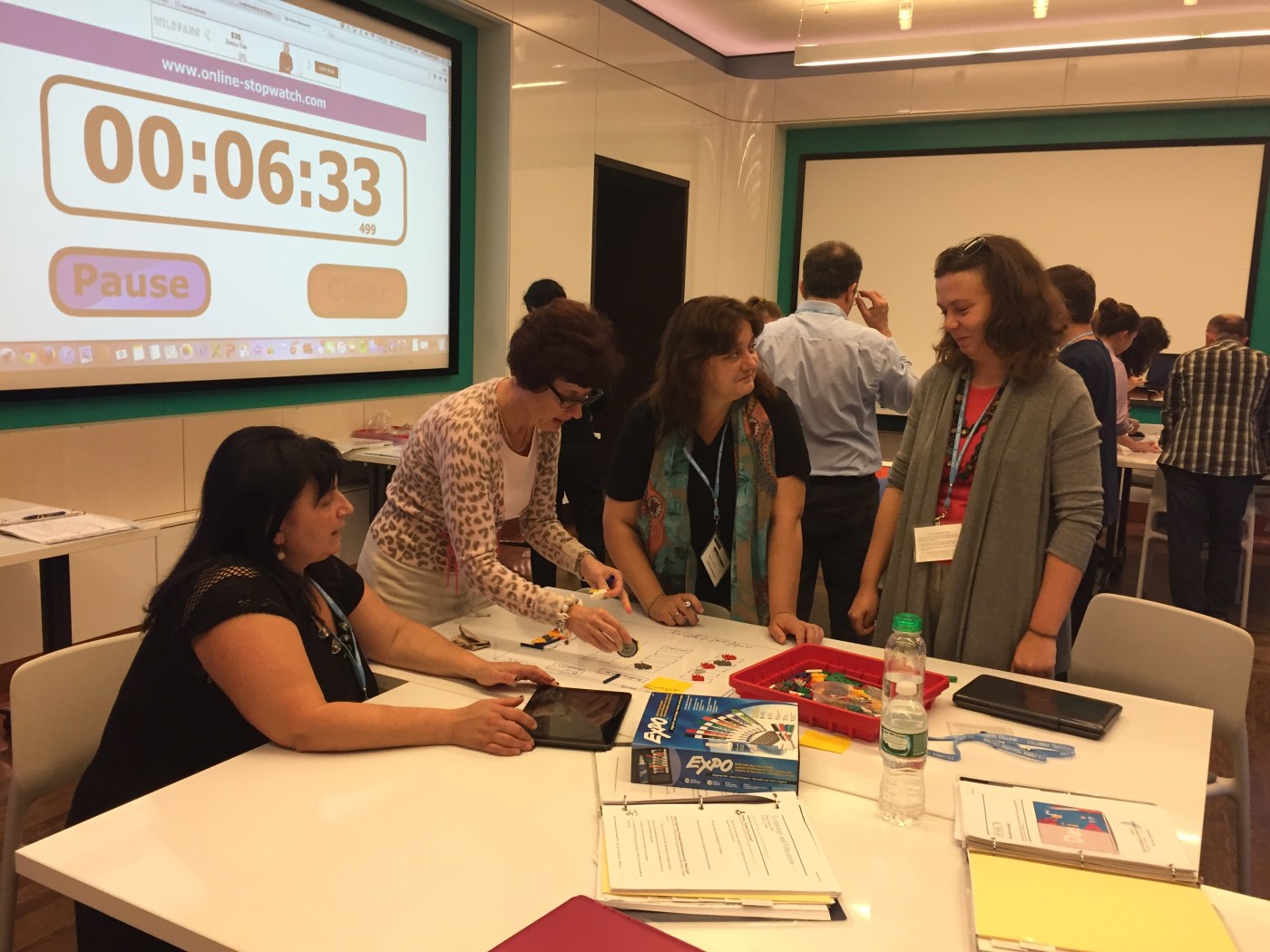
For the fourth consecutive year, the Educational Leaders’ Training Program (ELTP) brought 15 school educators from Bulgaria to New York for a three-week training program to explore and learn about instructional innovation. ELTP is a program coordinated by the Institute of International Education (IIE) and sponsored by the America for Bulgaria Foundation. The learning experience consisted of two distinct but integrated components: 1) academic sessions facilitated by CTSC, and 2) school visitations to learn from public schools and educators. Over the three weeks, academic sessions focused on teachers as designers, assessment as a tool for learning, and change in educational settings. In the first week, teachers reimagined instruction by designing meaningful technology-integrated, project-based learning experiences using a backwards design approach. During the second week, teachers addressed the question “How will we know if our students really understand?” by focusing on what authentic assessment means in project-based learning. In the last week, teachers considered their role as instructional leaders and strategized ways in which to share their experience with colleagues. During the field-work experience in public schools, teachers were invited into teachers’ classrooms to observe and reflect on lessons that used implemented technology-infused, project-based learning approaches. School principals also provided insight into how they lead instructional change efforts in their schools, empowering teachers as leaders in the process. Towards the end of the program, participants worked collaboratively to plan how the experience in the U.S could be adapted to support educational change efforts in Bulgaria.
More than anything this experience reminded me of Fullan’s proposal for educational change. Fullan (2007) proposes a reculturing is needed more than a restructuring for real educational change to take place. Reculturing refers to challenging existing cultures of teaching and learning and questioning how or why fundamental beliefs or habits need to change with the introduction of new technology. Our world has changed dramatically since the start of the 21st century and that means the students we teach have changed too. We need to begin to question how as teachers we can meet the needs of our students and the demands placed upon them in their fast-changing environment. Our beliefs and habits of teaching and learning must change for us to be creating 21st century learning experiences that foster 21st century skills of collaboration, communication, creativity and critical thinking as well as the meaningful use of technology.
References
Fullan, M. (2007). The new meaning of educational change. New York, NY: Teachers College Press.
 joannebeckwith
Leave a comment