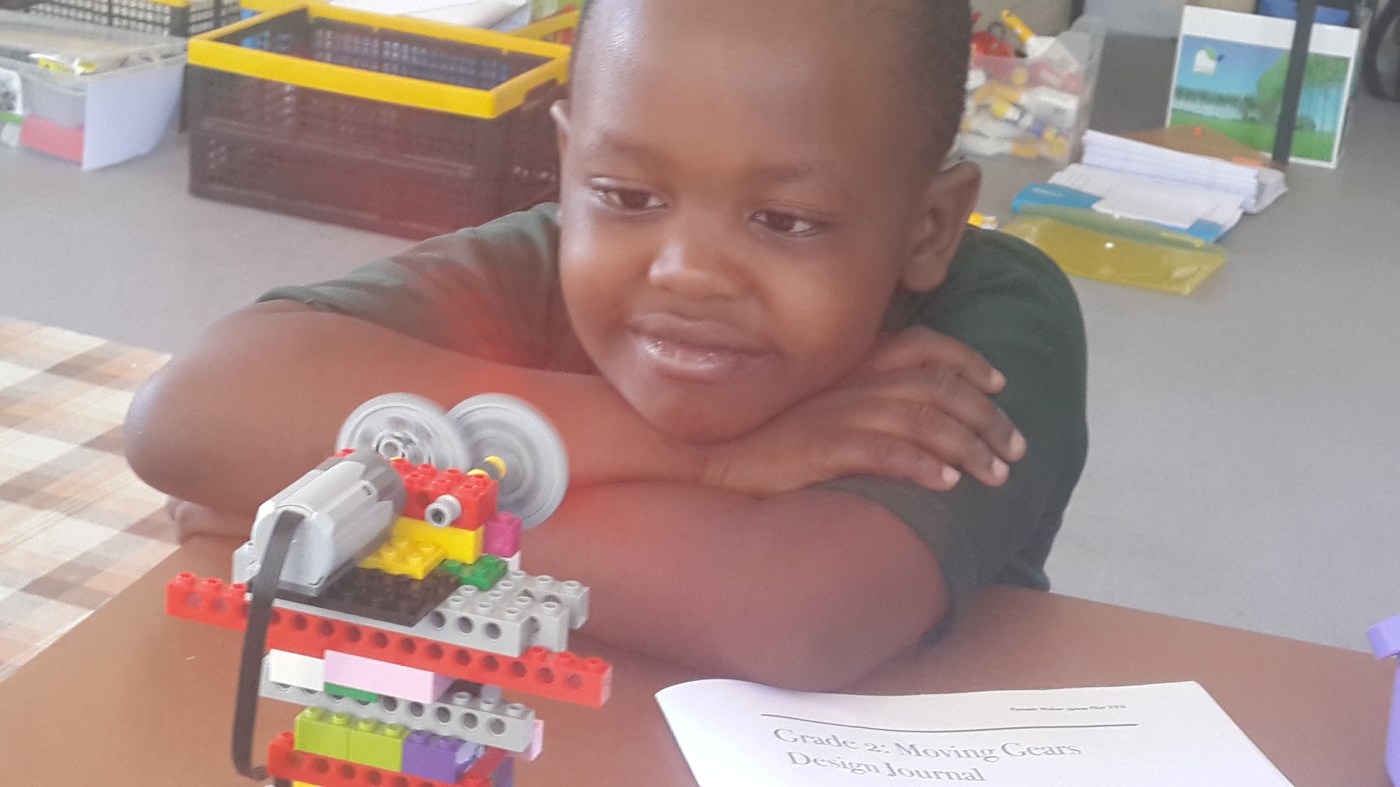
Seymour Papert, considered the father of constructionism, published his seminal work in 1980 called Mindstorms: Children, Computers and Powerful Ideas (1980). The forward to this work is titled “Gears of my Childhood” expressing how he says gears as a transitional object.
The gear can be used to illustrate many powerful “advanced” mathematical ideas, such as groups or relative motion. But it does more than this. As well as connecting with the formal knowledge of mathematics, it also connects with the “body knowledge,” the sensorimotor schemata of a child. You can be the gear, you can understand how it turns by projecting yourself into its place and turning with it. It is this double relationship–both abstract and sensory–that gives the gear the power to carry powerful mathematics into the mind…the gear acts here asa transitional object.
Papert claims that creating artifacts or “objects-to-think-with” are at the “intersection of cultural presence, embedded knowledge, and the possibility for personal identification” (Papert, 1980, p.11). This supports his belief that “children don’t get ideas; they make ideas” (Kafai & Resnick, 1996, p. 1, emphasis in original) implying the active role of students in iteratively uncovering knowledge while making.
In recent years with the explosion of the Maker Movement, individuals all over the world have realized the importance of making, especially as technologies have become cheaper and more user-friendly. Seymour Papert had a significant role in the Lego Mindstorms technology (inspired by the title of his book) which explores the ideas of robotics. Lego has also recently released LegoWedo kits which targets younger learners.
In an effort to introduce students to making in a way that did not follow a step-by-step guide provided by the educational kits, I created a design challenge for students using the engineering design process which supported the teaching and learning experience. Students are given the role of engineers as they work through the process of assessing the problem, imagining different solutions, choosing a solution, planning what it would look like and then creating it. The final stage called improve redefines what failure looks like in a school setting in that students are expected to make mistakes, but are given the opportunity to address them and rectify or improve their designs.

Taken from the Boston Museum of Science.http://www.eie.org/overview/engineering-design-process
Based on a local problem, this project was conceived. South Africa experienced record-breaking hot temperatures in November of 2015 and so in an effort to address this issue, students designed and created fans to keep people cool.
Check out the: Ubd Grade 2 lesson plan and the Grade 2 Design Journal.
The sessions started off with students getting acquainted with the technology ie. Lego and some more of the complex Lego pieces that students had never seen before such as the gears, axles, connector pegs. Getting to know the Lego pieces has significant interdisciplinary content connections such as counting, basic multiplication, sorting, categorization, naming and reading parts.
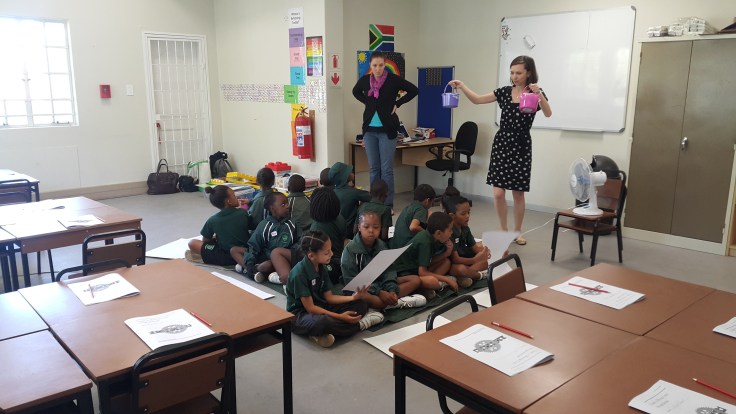
Students were then introduced to gears and had several activities to complete in order to understand what gears looked like, how they worked and depending on the order and arrangement of two or more gears what the resultant motion looked like.
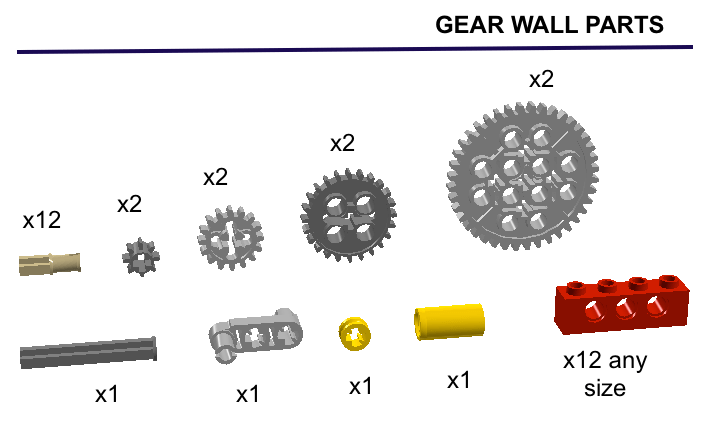
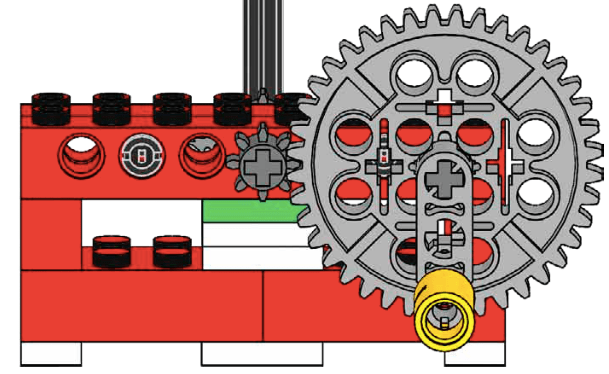
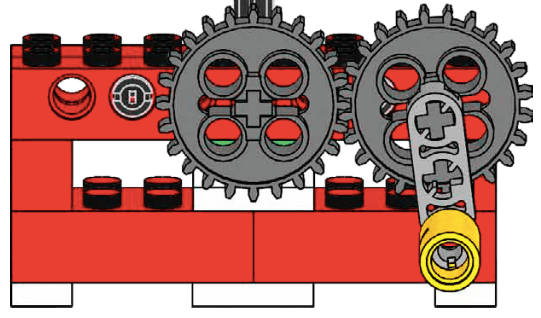
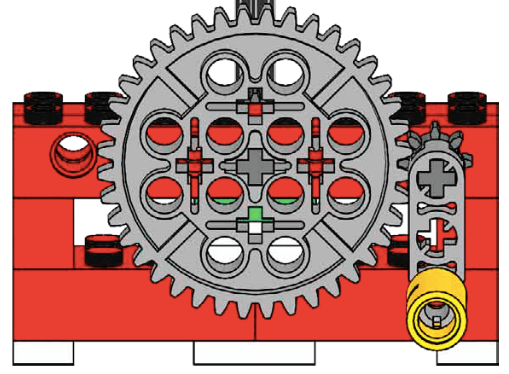
Once students had a basic understanding of gears, they had to motivate which gears they wanted to use to create their fans. Then students explored the idea of blades and the purpose of blades in a fan. Students chose the materials for creating the blades and many realized the affordances and limitations of some of the materials- such as the pipe-cleaners were too flimsy to make air move and they needed something sturdier.
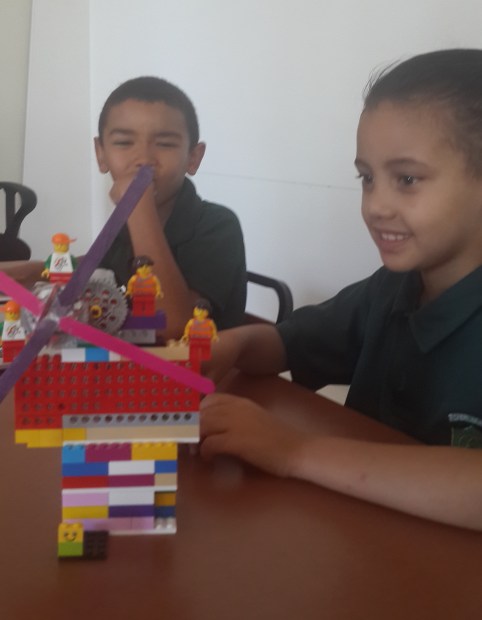
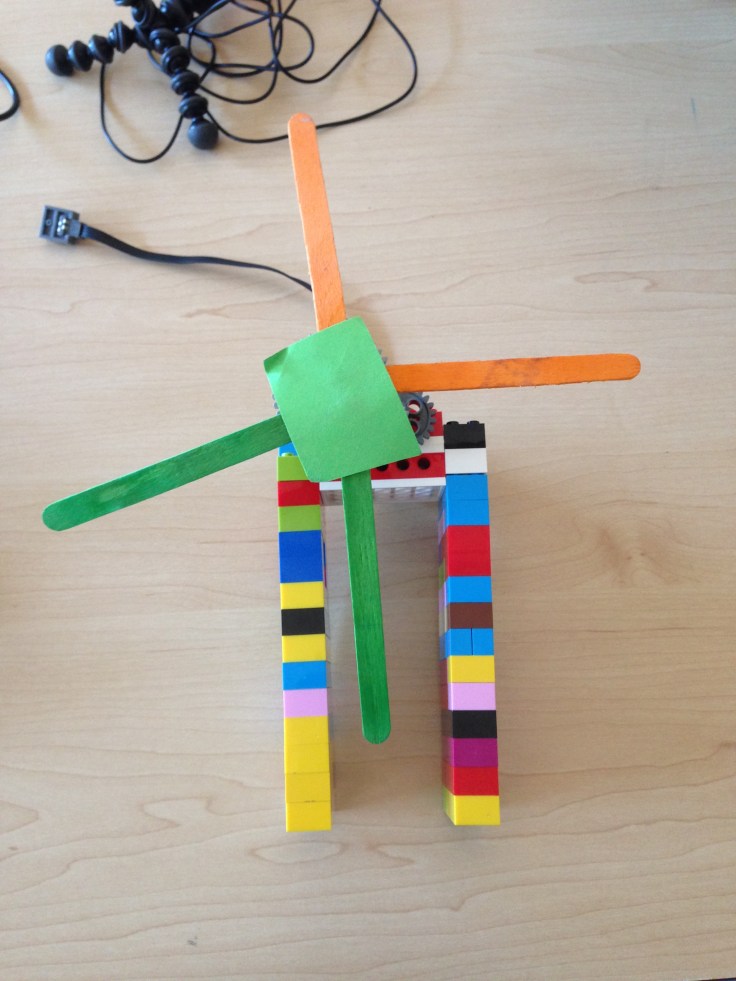
Once the fans were working, motors were attached and students programmed the code to make their fans work using the Scratch platform. Students were ecstatic about their fans and were able to identify problems in their making process and how they could fix those for future iterations.
References
Kafai, Y. B., & Resnick, M. (1996). Constructionism in practice: Designing, thinking, and learning in a digital world. Routledge.
Papert, S. (1980). Mindstorms: Children, computers, and powerful ideas. Basic Books, Inc..
 joannebeckwith
Leave a comment